Traditional vs AI Product Photography: Which is Best For Your E-commerce Brand?

Your product photos are not just visual representations of your brand: they are silent salespersons that determine whether your next customer buys or scrolls past. On e-commerce sites where you're not physically present to convince the customer, your product photos do the compelling, talking, and conversions. And this is why many e-commerce brands invest time, energy, and resources in producing high-quality visuals for brand awareness, Ad campaigns, and sales.
With the rise of AI photography tools, producing product visuals for marketing purposes has now become easier and faster for brands than ever before. These studio photography alternatives have evolved over the years, significantly improving how brands ideate, create, and develop product-led visuals for their marketing campaigns.
This article dives deep into the contrasting features and benefits of AI product photography for e-commerce brands and how it compares with traditional means in terms of cost, time, quality, scalability, and flexibility.
What Is The Difference Between AI and Traditional Product Photography?
AI product photography refers to the use of generative AI tools and software to create, edit, or manipulate raw product images to produce visually appealing photos for various use cases. Traditional product photography is the art of directing and shooting product images in a studio, outdoor, or indoor setting.
Like traditional photographers, AI photography tools employ different backgrounds, angles, lighting intensity, and styles to generate multiple creative product photos in hours or even minutes. It only requires your text prompts and reference images to create high-quality, aesthetic photos of your products.
AI product photography offers a simple, fast way of generating product images, making it cost-effective and scalable for fast-growing consumer brands. Traditional photography, however, is ideal for capturing finer details, creating disruptive visuals, and telling authentic stories, all of which most AI tools (like Pikes) now excel at.
How AI Tools is Replacing Traditional Studio Photography
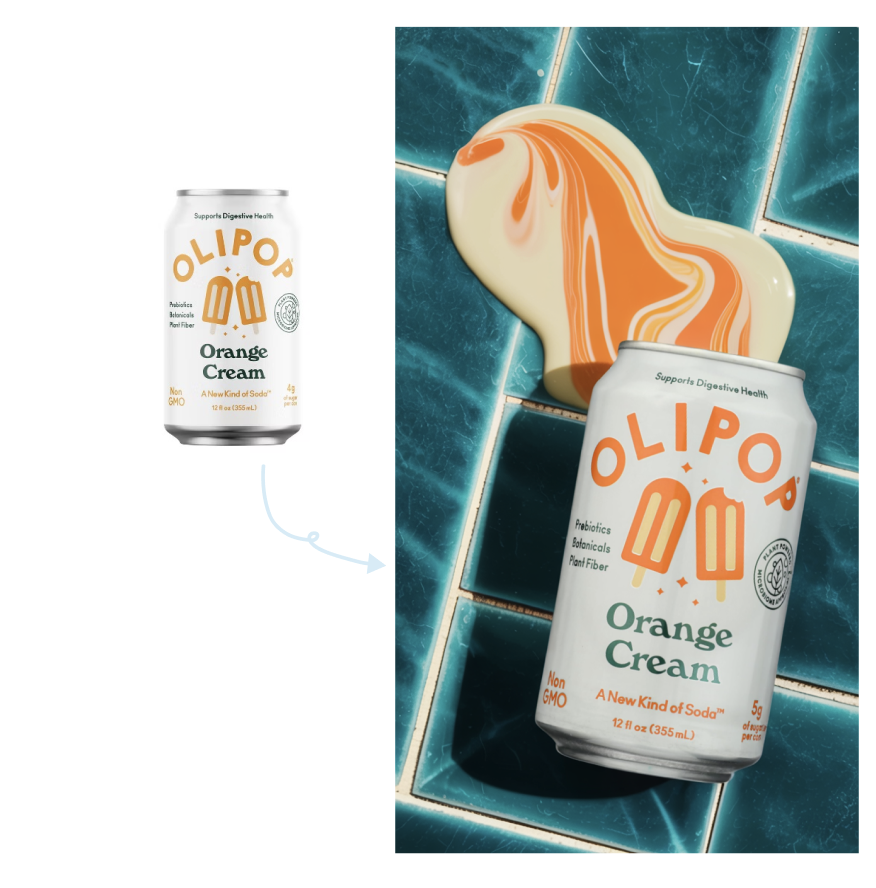
Through constant upgrades and technological advancements, AI tools are now producing results that match and even exceed those of traditional photography in the following ways:
Automated Edits
AI tools are excellent for automating edits across large batches of images to maintain uniformity in lighting and styling. In one click, you can replace unattractive backgrounds with modern, aesthetic options and apply the same edits across all your product images, producing brand consistency.
Lifestyle Photography
You can easily generate real-life photographs of your products in a natural setting and demonstrate how your product is used in reality to spark interest and engagement. Traditionally, this consumes resources, time, and energy, but can now be easily replicated with AI. Simply upload your product images into an AI tool, and it generates multiple lifestyle photographs of your products.
Creative Concepts
With AI tools, you can generate creative, visually appealing product images for ads and social media campaigns by inputting your ideas in the form of text prompts or uploading a sample design.
Product Modeling
AI product photography completely eradicates the cost and time spent on hiring models for product demonstrations. You only need to submit some reference images of your model and product to get hyper-realistic, studio-quality photos of your custom-trained model using or wearing your product.
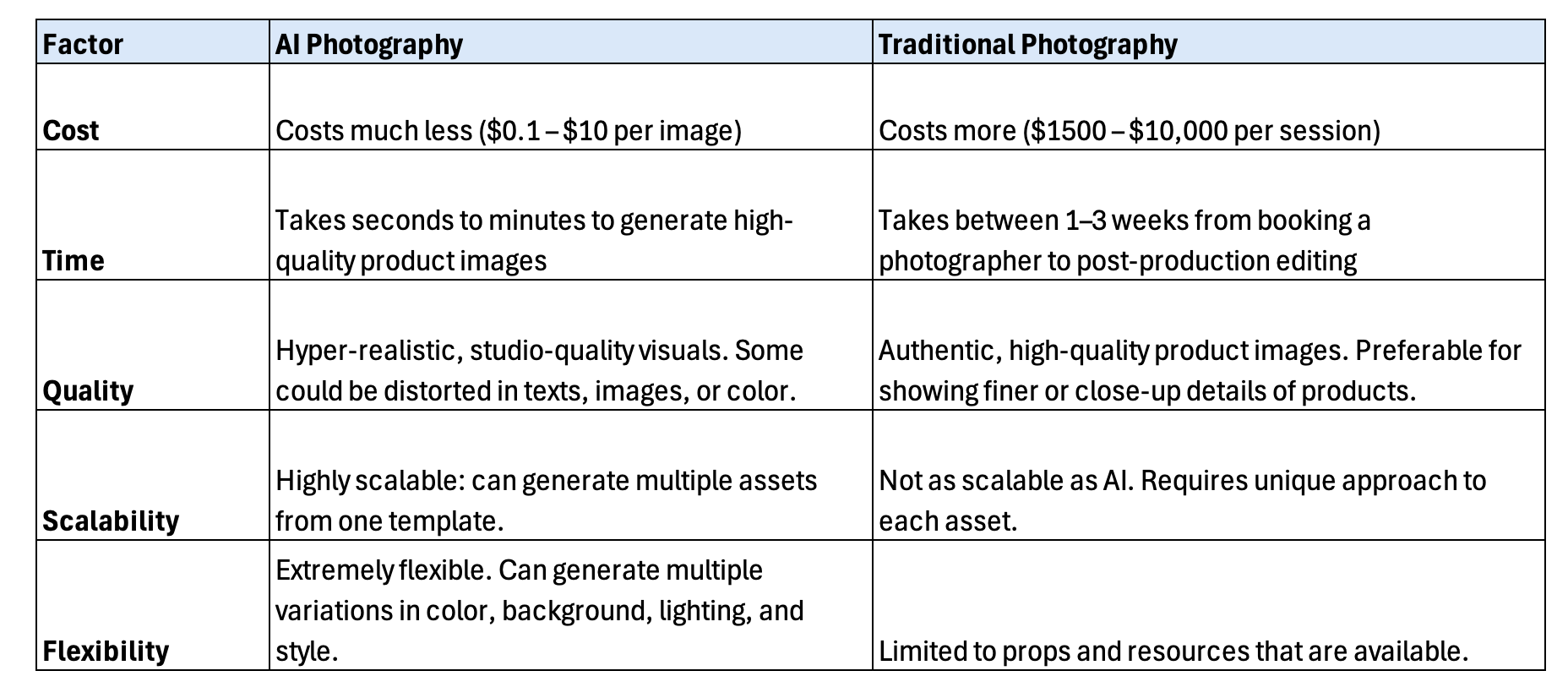
AI vs Traditional Product Photography: Practical Comparison
Cost
Traditional product photography costs thousands of dollars. From renting a studio or location to hiring models, it constitutes a significant portion of most brands' marketing budget. Here's an average breakdown of money spent on a traditional product photography session:
- Camera and props: $500-$3000
- Models: $150-$300
- Studio/Location renting: $50-$500/day
- Photographer fees: $100-$500/hour
- Retouching/edits: $10-$100/image
A typical traditional product photography session could cost between $1500 to $10,000. Meaning, you would be spending roughly $50-$500 per product image shot.
For AI photography:
- Monthly subscription: $30-$1000
- Expert prompt engineer fees (optional): $100-$2000
This brings the average pay per image generated through AI at $0.1 - $10. A practical example is Pikes Growth subscription plan, which costs $99 per month and allows you to generate up to 1000 studio-quality content assets.
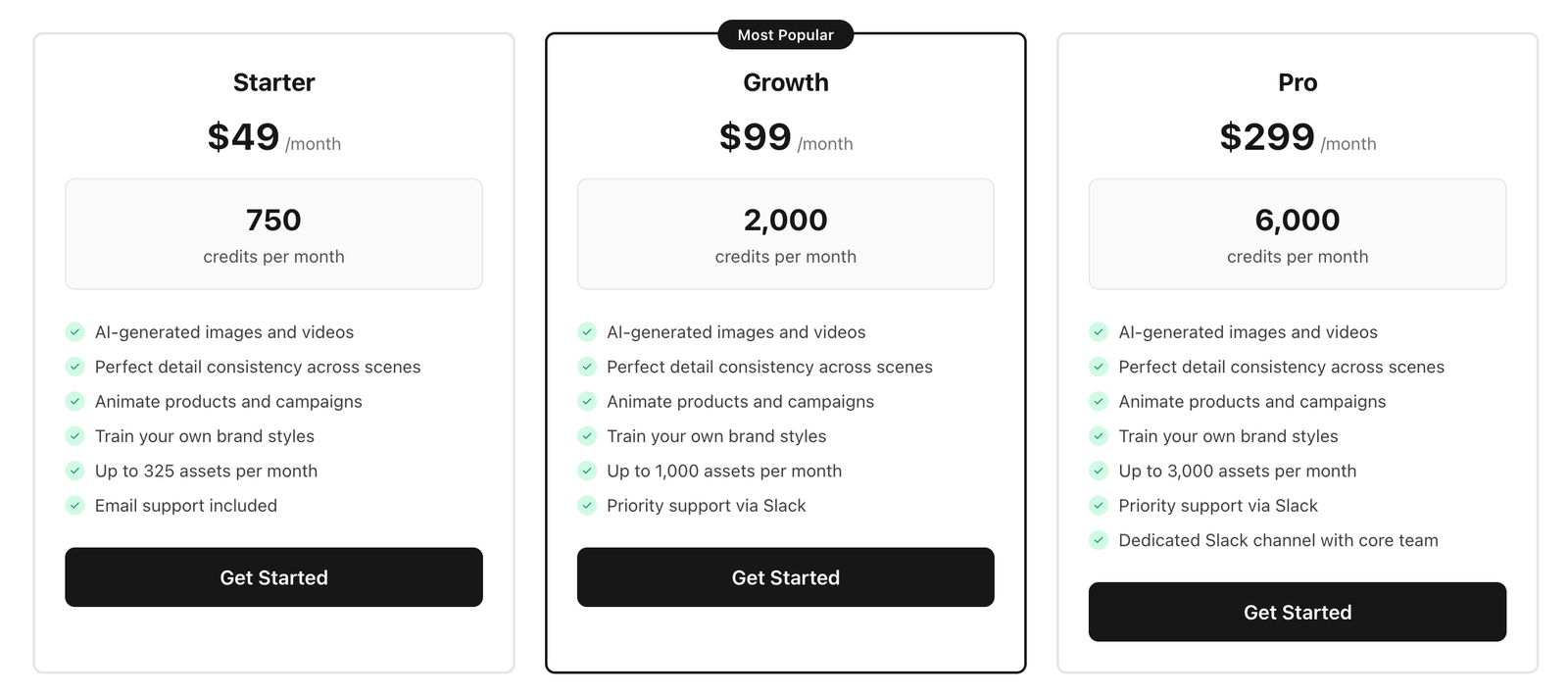
The per-unit cost of each image on this plan would be $0.1, demonstrating a much lower cost than that of traditional means ($50+).
Time
Traditional photography requires weeks of planning to happen. From booking a photographer to post-photography editing, the entire process could run for 3 weeks. Time spent in coordinating models, tweaking lighting, and changing styles during studio sessions can elongate the process, and unforeseen circumstances like bad weather can slow down production. If you need to quickly adapt to changing market demands or you urgently need on-brand content for a marketing campaign, relying on traditional means can affect growth.
AI, however, can generate high-quality content assets within minutes. If you own an e-commerce brand with a wide catalog of products, AI photography tools allow you to create on-brand product content for multiple platforms without delay. For brands that need multiple variations of product images for A/B testing, AI allows you to edit, tweak, and adapt to the best-performing version early. It eliminates the time constraint challenge in your marketing campaigns and helps you to achieve ROI faster.
Quality
Every good photo is a product of careful attention to the tiniest details, and this is where traditional photography excels. It gives full control over the lighting intensity and positioning, background choice, camera angle, and photo concept, allowing authenticity and talent in each shot. If you're looking to evoke some emotions, create disruptive visual stories, or expose the finer details of your products, traditional photography is a great option to consider.
AI can also generate high-quality visuals for brand awareness, social media campaigns, and marketing. It processes your prompts and product images to bring your ideas to life. It can produce stunning compositions, perfect styling, and lifestyle scenes that are hard to shoot in real life.
Flexibility
Carrying out a successful marketing campaign involves several A/B tests to select and adapt to the best-performing option. With traditional product photography, that means spending more to create multiple variations of product shoots to find out which works best. For brands with a limited budget, much of the selection is given to guesswork because there's not enough for the extra cost.
However, AI product photography provides flexibility that allows you to create multiple product photos with variations in concepts, lighting, and approach for A/B testing. Unlike traditional photography that involves lots of time, energy, and money to find out which converts better, AI photography allows you to easily create multiple versions in one click, test them out in a short span, and select which is best for your marketing campaign.
Scalability
Traditional photography is scalable, but only linearly. More product images means double the cost and time leading to more logistics, storage and coordination.
AI photography allows you to generate thousands of images at little to no extra cost or time. With a single prompt template and few raw product images, you can generate multiple variations of one single product and scale faster.
Best AI Tool For Product Photography: Pikes
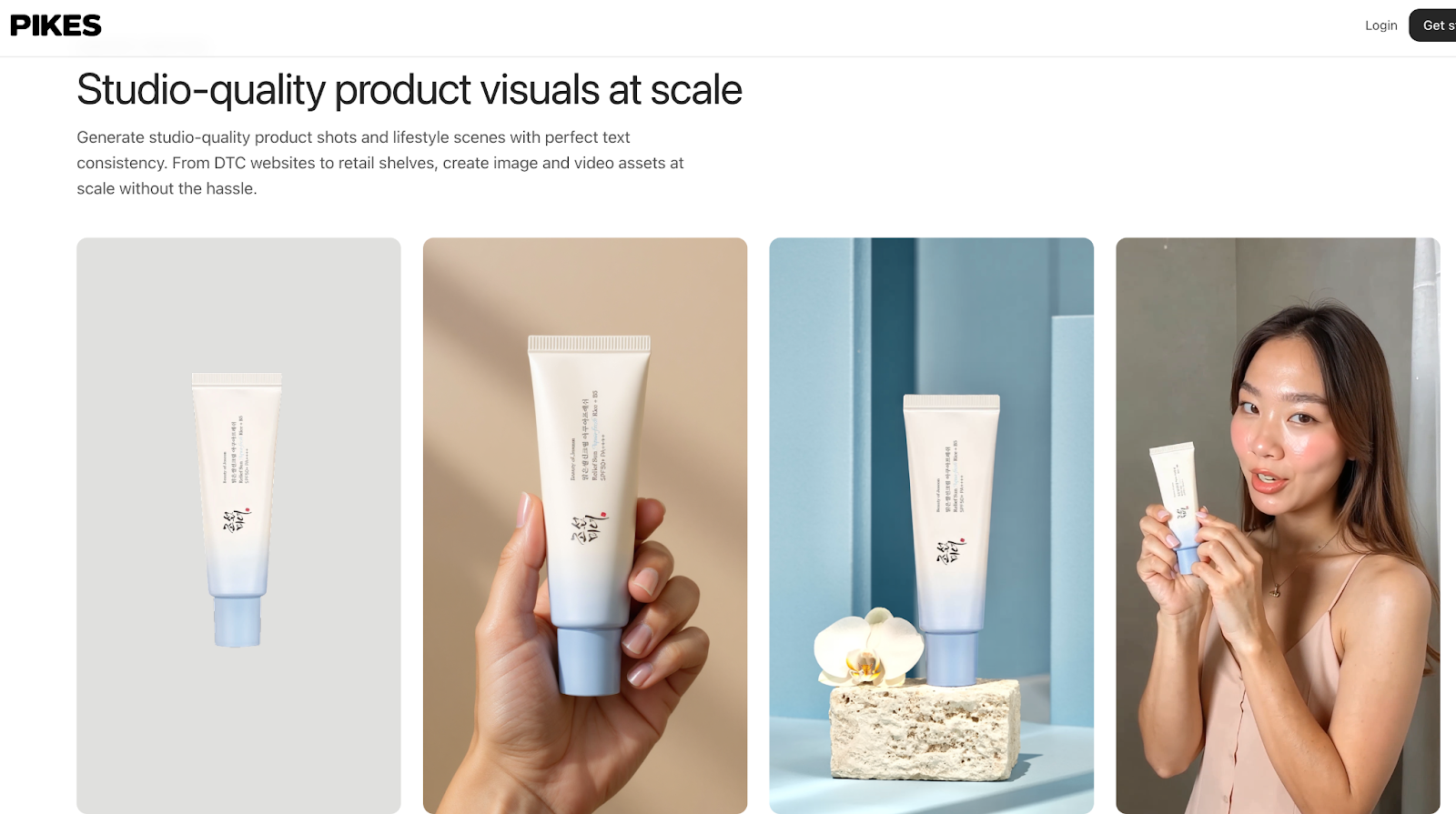
AI creates high-quality product images faster and at a lower operational cost, compared to traditional means. Hence, many e-commerce brands with a large product catalog are switching to AI product photography to cut costs and scale efficiently.
With the numerous studio photography alternatives available in the market, selecting a reliable tool for your e-commerce brand can be challenging. However, with Pikes AI, you can get all you need for product photography and content creation in one place.
FAQ
Is AI product photography better than traditional photography?
AI product photography is better than Traditional photography in terms of cost, scalability, time constraints, and efficiency. It produces quality outputs in a short turnaround time while maintaining on-brand consistency across all assets. Traditional photography is especially useful for telling authentic stories that connect deeply with audiences or for high-end editorials and magazines. Although many AI software are advancing towards bridging that gap and creating content that matches traditional versions.
Is AI Good For Product Photos?
Yes, AI is good for a number of use cases, including batch-replacing backgrounds, creating multiple backgrounds, and automating edits across product photos and product photography. Most AI software is now capable of generating product photos with perfect text and label consistency, thereby delivering the same results as traditional means. For e-commerce brands that need regular shoots to upload their wide product catalog to listing websites, AI is a faster, cheaper, and more scalable option for product photography.
Can AI Product Photography Completely Replace Traditional Photography?
AI product photography will replace traditional photography for low-cost, high-volume needs. However, brands that value a human approach may still choose to rely on traditional means for authenticity and full creative control.
Why Are Brands Switching To AI Product Photography?
Many e-commerce and fast-growing CPG brands are switching to AI product photography because of the flexibility it offers, its low time-to-market rate, the significantly lower cost, and the speed it provides, allowing them to adapt to fast-changing market trends.