
Higgsfield Vs Pikes AI For Brands

Content plays a key role in shaping consumers’ perception, and brands are constantly racing to create one that blends creativity and brand consistency. While Gen-AI platforms like Higgsfield and its alternatives claim to offer solutions to meet this need, not all platforms deliver as promised.
Higgsfield impresses with aesthetics and a wide array of tool kits, but multiple users complain of slow generation times, limitations in customization, and, most commonly, distorted product labels and text. Pikes, on the other hand, is slowly revolutionizing how branded content is produced.
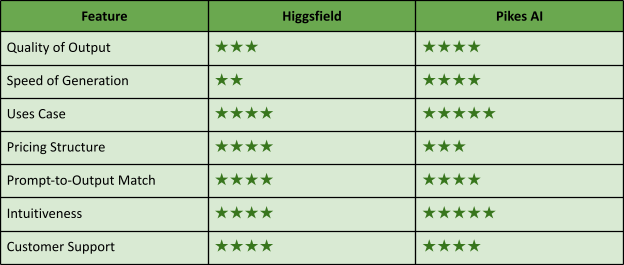
To help you fairly compare between Higgsfield and Pikes AI, this article explores their key differences based on these 7 qualities below:
- Output Quality
- Use Case
- Speed Generation
- Pricing Structure
- Customer Support
- Prompt-output Match
- Intutiveness
Before we dive into these qualities, let's briefly explore the features, pros, and cons of these two platforms.
Overview of Higgsfield AI
Higgsfield is an AI-powered platform that performs a number of content creation tasks, including image-to-text, visual effects, and video editing. It is ideal for content creators, filmmakers, and digital artists who need a creative suite for performing cinematic edits on videos and images.
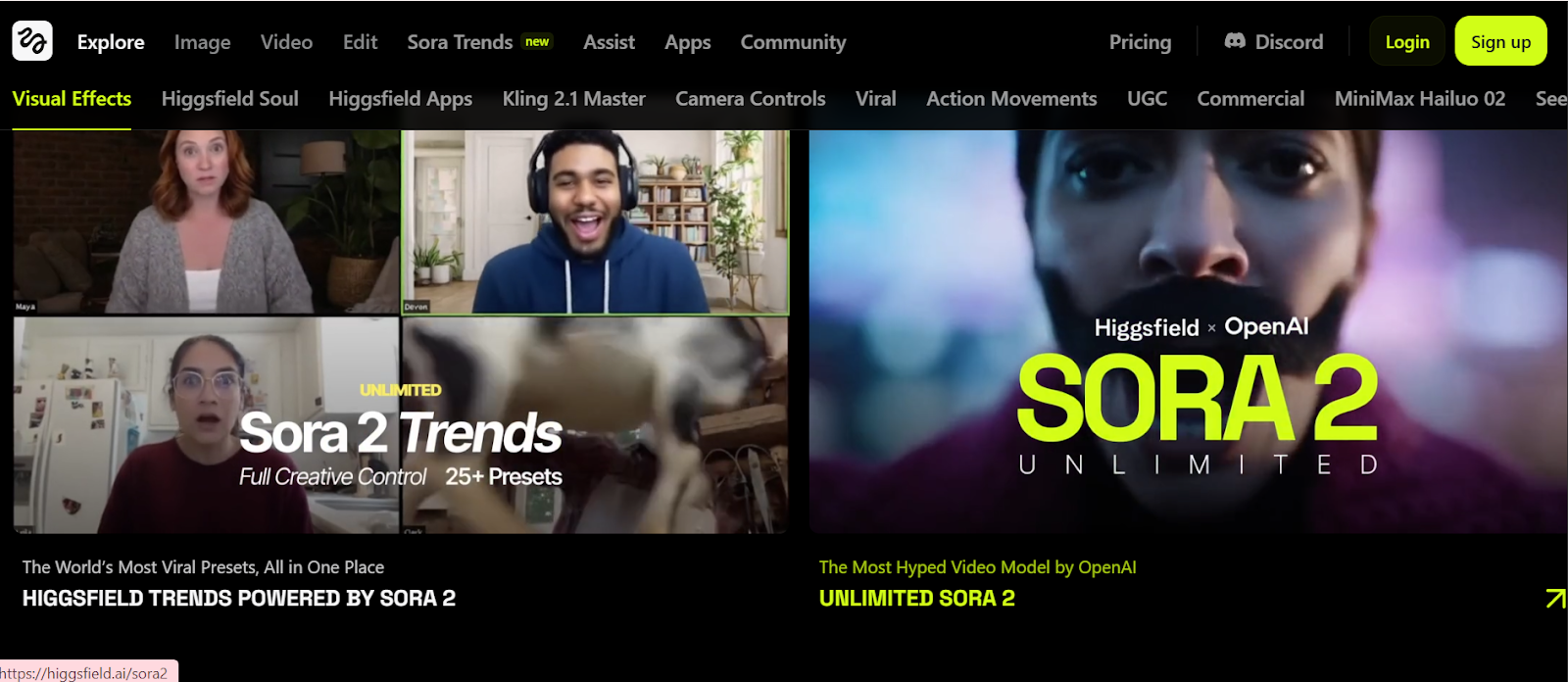
The tool employs a number of features like lip-sync studio, fashion factory, cloning, reels generator, sketch to video, action movements etc. to create hyper-realistic visuals for entertainment and commercial purposes. The platforms also integrate other models like Google Veo 3.1, Kling 2.1 master, Sora 2 from OpenAI, and WAN 2.5 to provide a comprehensive tool stack for creatives and marketers.
Pros
- Comprehensive tool kit for cinematic edits
- Affordable pricing tiers for all budgets
- Frequent updates
- Multiple video models
Cons
- Not ideal for e-commerce brands.
- It often distorts product labels
- Feature complexity
- Limited cost-credit model
- Poor customer support
- Bugs, lags, and slow generation during uptimes
Pikes AI
Pikes, on the other hand, is a Generative AI platform designed to help e-commerce owners and product marketers create studio-quality product content. Some of the platform’s capabilities include professional product photography, animating static product images into videos, and training models for product demos. It is specifically built to help you create high-quality content for your products.
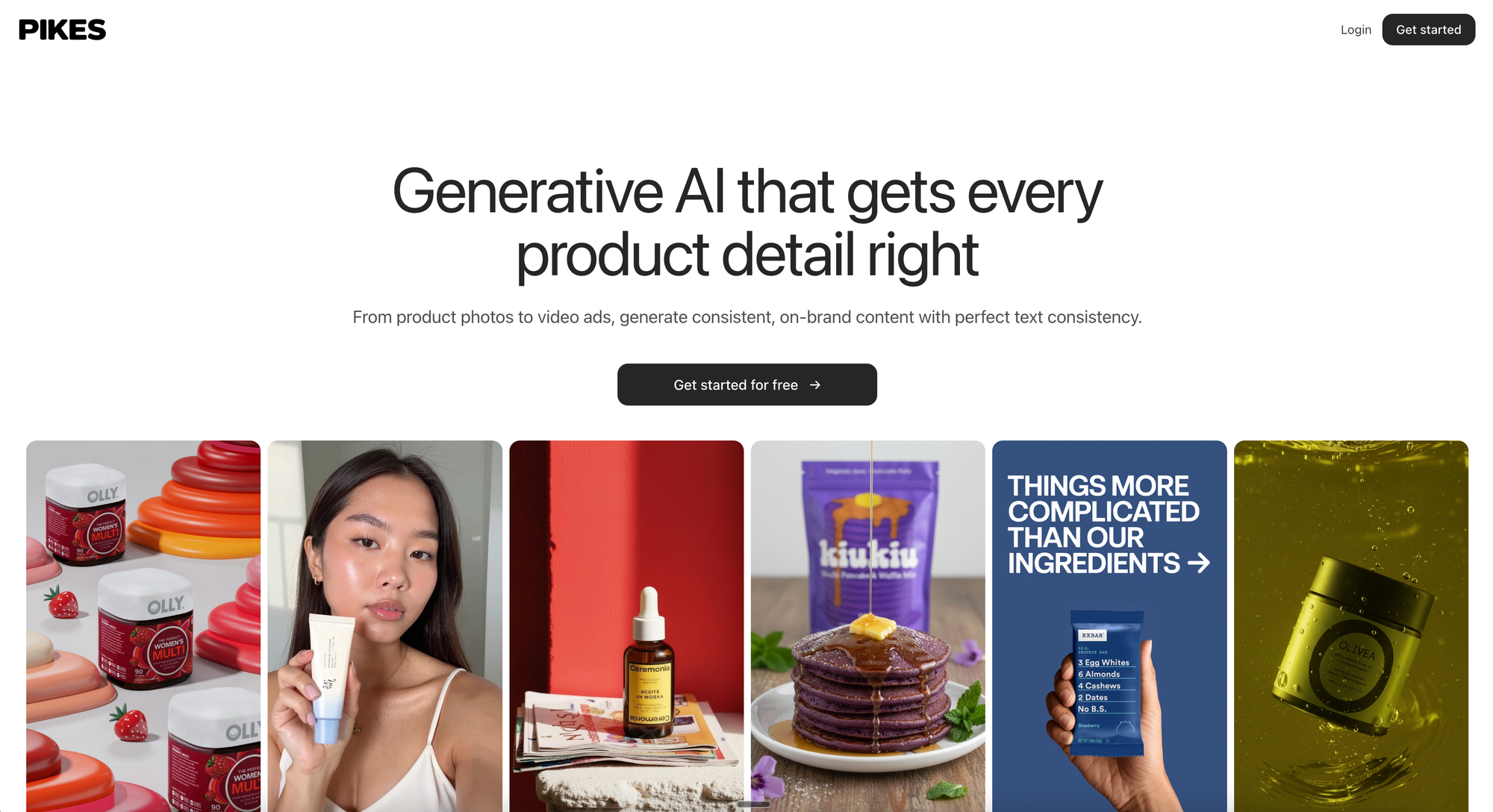
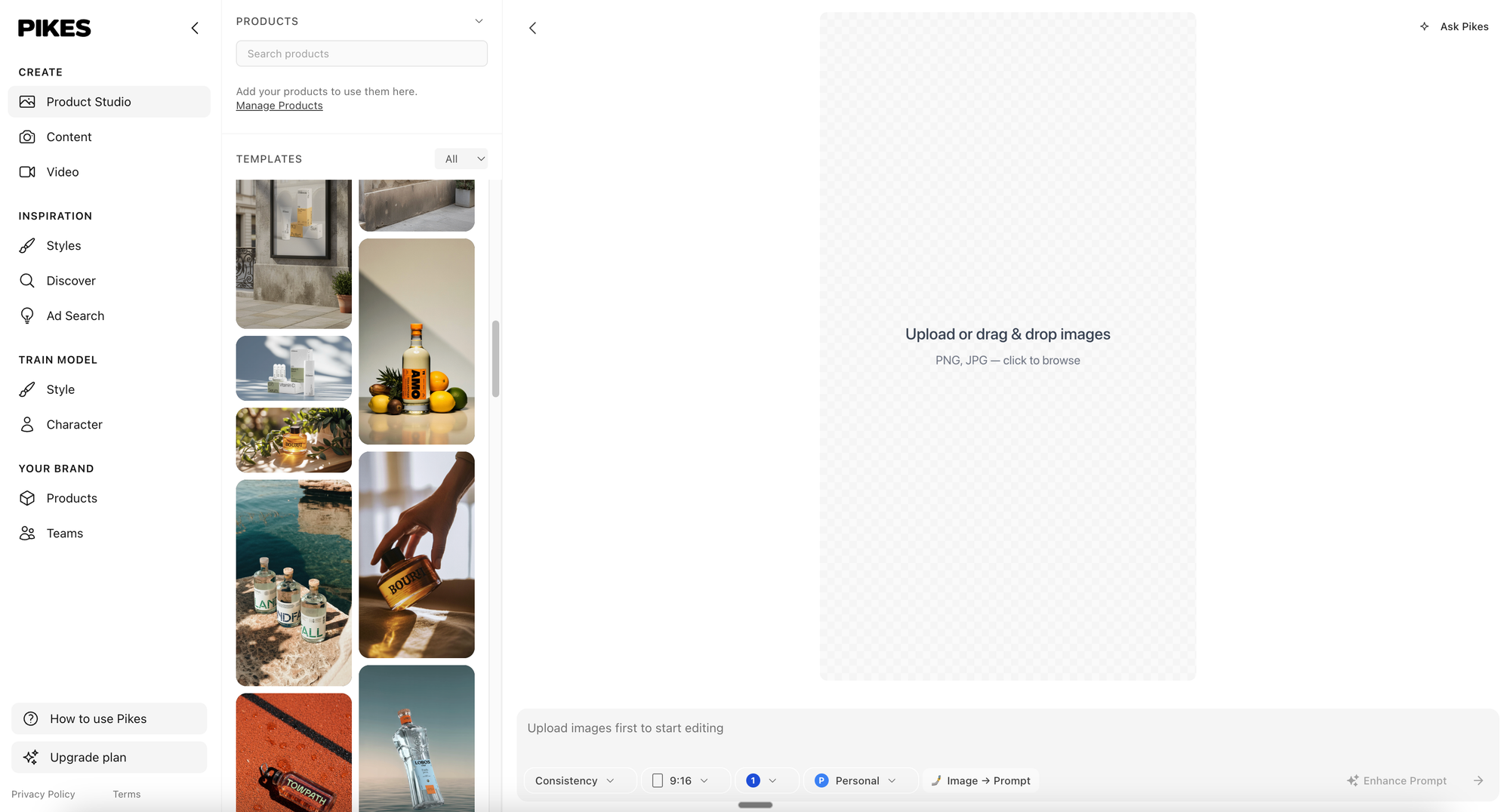
Pikes AI has a number of intuitive tools that make content creation easy for non-technical marketers. From product photography to image editing and video generation, the minimalist UI makes you even more creative. The platform also has an “inspiration” section that contains content with successful performance for replication. Overall, Pikes AI is designed to provide you with all the tools and features you need to drive engagement and sales through creative content.
Pros
- Consistent product labels
- A complete suite for E-commerce Brands
- Free trial available for testing
- Lifestyle image generation
- Video generation
- Full customer support
- Easy subscription cancellation
Head-to-Head Comparison: Higgsfield Vs Pikes AI
We’ll be comparing Higgsfield to Pikes AI based on a number of features, which include:
Output Quality
The quality of your product content influences your audience’s perception of its quality and your brand. Blurry images, unrealistic models, and inconsistent texts easily paint an impression of a low-quality product. And like they say, first impressions stay the longest. This is why a tool with high-quality outputs is an asset to any team.
Higgsfield does relatively well in this feature as it generates hyper-realistic visuals for creators and filmmakers. However, it lags in generating usable content for e-commerce brands. Several users reported getting bad image outputs on Trustpilot and G2. This makes it a potentially bad choice for producing marketable product images and videos for ads.
Pikes AI, on the other hand, creates studio-quality product shots, video ads, and models for your products. Pikes uses a style and character feature that allows you to maintain consistency across all content at scale (which is lacking in Higgsfield). This ensures that your products stay unique and consistent without having to confuse your audience.
Another standout feature of Pikes is its ability to create product content without any alien texts or distortion in the product label, packages, or form. This way, you can create studio-quality images and videos without worrying about changes to your original product.
Use Cases
Having a tool that can perform all your product content creation tasks helps you save costs and stay organized. For ecommerce brands, Higgsfield creates impressive lifestyle product content, still images, and UGC that are useful for marketing campaigns, transformational-based content (before and after), and social proof. But when it comes to generating on-brand content, it distorts the product labels and makes them unusable.
Pikes AI, however, offers a comprehensive toolkit that allows you to create content for multiple use cases. The tool uses a best-in-class model that performs all types of content generation tasks, including image editing, product image animation, text-to-image, and custom-trained models. Instead of spending more on product photography to create multiple images in different styles, Pikes allows you to generate as much studio-quality content without spending extra. It is your perfect substitute for your favorite product photographer.
Generation Speed
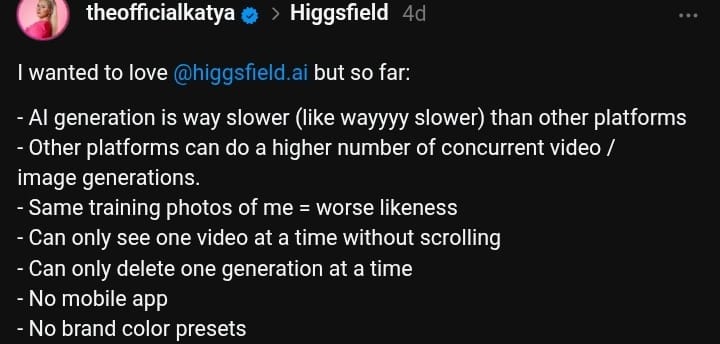
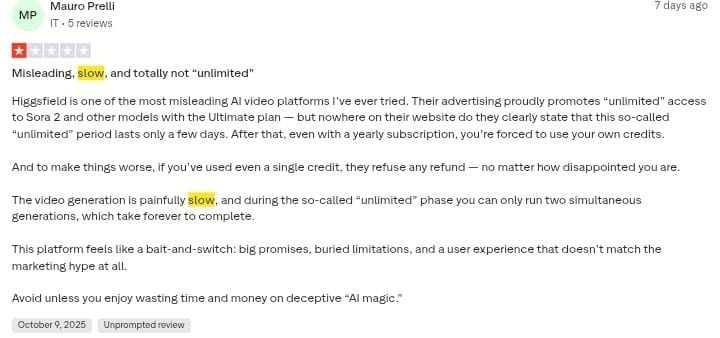
You want to be able to generate images and create videos on the go and not have to wait hours to upload or generate content. Higgsfield appears to fail in this area, as multiple users consistently complain of the platform being incredibly slow.
Pikes, on the other hand, is fast and allows you to apply the same edits across multiple content to create more at scale.
Pricing Structure
When selecting a Gen-AI platform for your product content creation tasks, you must consider a pricing structure that reflects a balanced cost-to-value. Higgsfield operates on a credit system and has four pricing tiers: Basic ($9/month), Pro ($29/month), Ultimate ($49/month), and Creator plan ($149/month).
The plan appears to be flexible, but a practical look proves this otherwise. Most users complain of their credits finishing after a single or a few uses— a practical reflection of a low-cost credit structure.
Pikes, on the other hand, has three pricing tiers and also operates on a credit system: Free, Starter ($49/month), Growth ($99/month), and Pro plan ($299/month).
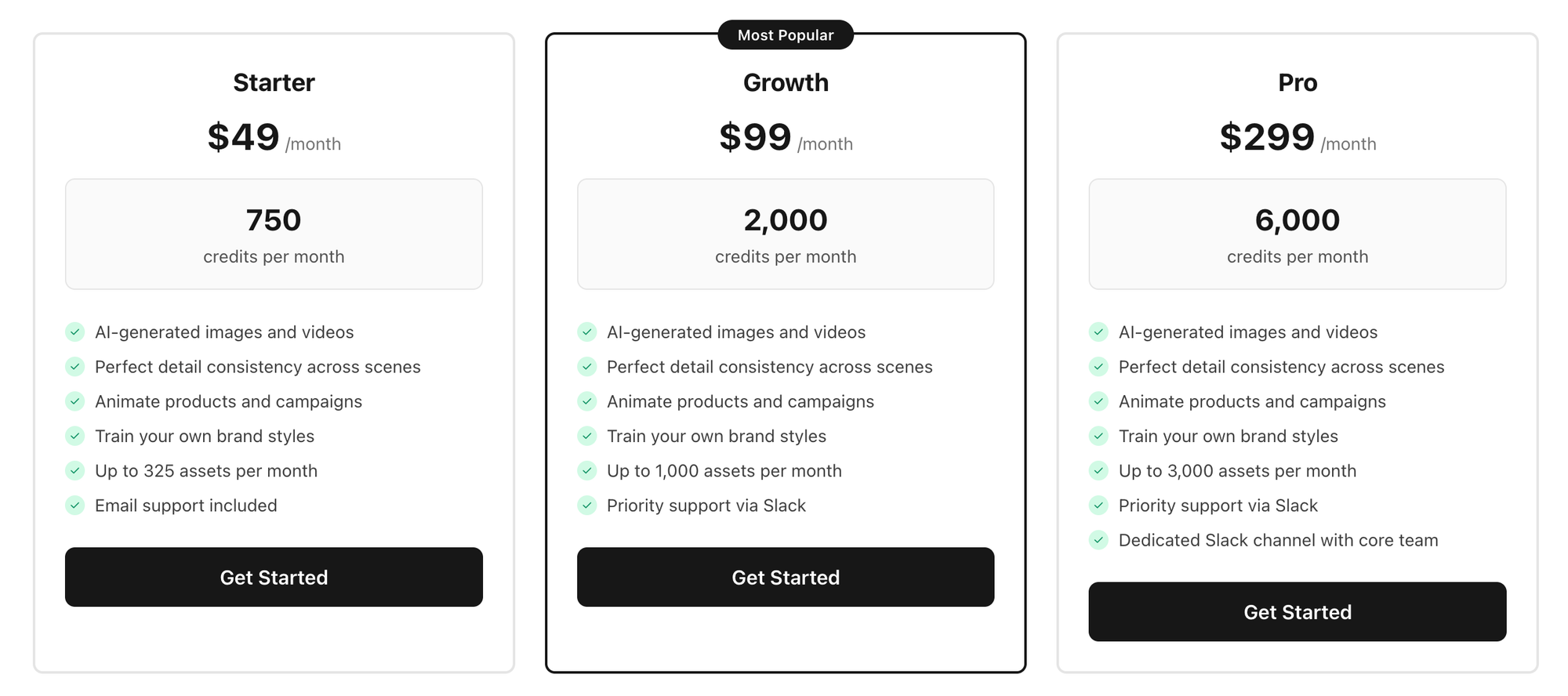
Although seemingly more expensive than Higgsfield, the Starter plan allows you to create up to 325 studio-quality professional images, while the growth and pro plans allow up to 1000 and 3000 images, respectively. In addition, each plan comes with unlimited projects and cloud storage, allowing e-commerce brand owners to generate and store millions of high-quality product images in one space.
Customer Support
A good customer support team has real people behind the scenes listening, responding, and addressing users' complaints. But what if it's not the case for all Gen-AI platforms, like Higgsfield?
Multiple users across review channels report being ignored or flat-out being responded to by an AI chatbot when trying to report an issue. Based on the reviews of most users, it appears that Higgsfield has a poor customer support system. And when several people are complaining about the same issue on a platform, it is a matter that should be seriously considered.

Pikes, however, has a comprehensive support team that responds to users’ inquiries, requests, and complaints via email.
Output quality
When trying to generate high-quality product images for your brand, it’s one thing to be good at prompt engineering, and another thing for a tool to generate according to what you envisioned. A tool with a near-perfect prompt-to-output match is an asset to any team, while a tool with a poor output is a frustrating tool to have, no matter how cheap or affordable it may seem.
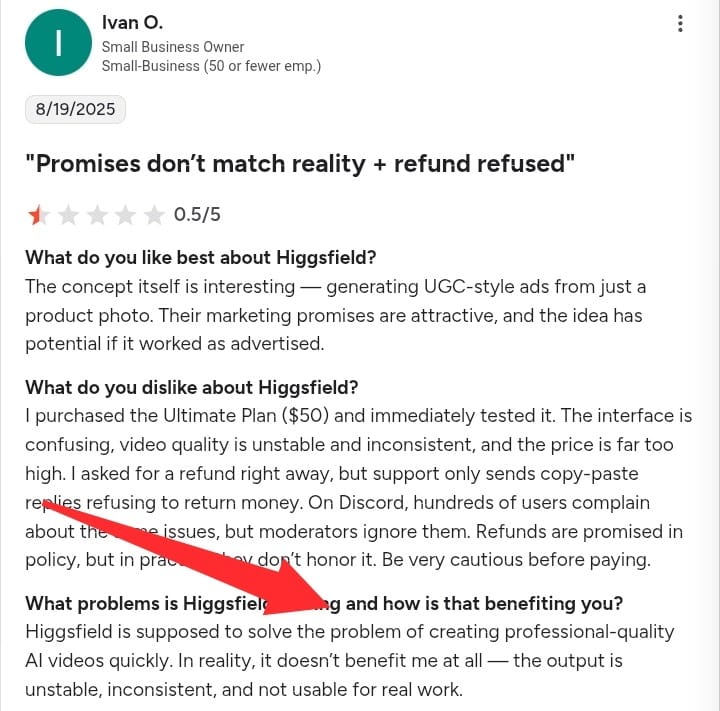
Users of both Higgsfield and Pikes AI report achieving a good output when they type in their prompts into the tool. Higgsfield users, however, notice some mismatch in the output generated.
Intuitiveness
Having a platform that is easy to navigate, intuitive to use, and offers the exact tools that you need simply makes your work much easier. Higgsfield has a wide array of technical tools, multiple video models, and long lists of visual effects. While this is ideal for skilled content creators and filmmakers, it may be overwhelming for those who simply want to generate content without going through a learning curve.
Tired of having to take endless tutorials and master an overwhelming number of tools? Pike's minimalist and intuitive interface allows you to get ahead without the hassle of tutorials and courses.
Which Gen AI Platform Is Best For E-commerce Brands?
Based on this comparison, Pikes AI proves to be a more valuable tool than Higgsfield. While Higgsfield provides a comprehensive toolkit for cinematic videos, visual effects, and action-themed content, it simply does not provide the functionality needed by e-commerce brands.
Pikes, however, is specifically built to cater to e-commerce and product marketers who need an all-in-one platform for their everyday content creation tasks. Its intuitive interface, best-in-kind model, and powerful product photography capacity make it the best choice for brand owners who need studio-quality content for marketing and ads. The team features also allow e-commerce team members to work together from anywhere in the world.
With Pikes, brands can create premium content that accurately communicates their value and style, making it worth every dime spent.